LIVE AI Product Manager Bootcamp: Scope, Orchestrate & Ship
Built for Working Professionals Ready to Lead AI Products
20
Live Sessions
10
Weeks
1-3
Simulated Client Meetings
1
Capstone Project
1 Year
Access to Class Recordings
38+
Enrolled Learners


Join a cohort of professionals moving into AI product roles

Build a RAG chatbot and an AI agent, no coding background needed

Lead AI products with the PRD, evals and cost model to back every call
Codebasics Promise
We stand by the quality of our content. Not satisfied? No questions asked refund until 26th October 2026 for non-EMI enrollments.
Added Benefit
If you have already taken our paid Soft Skill course(s) or bootcamp, you will pay only the difference (This Bootcamp Price - Money You Paid for Soft Skill course(s) or bootcamp Price)
20
Live Sessions
10
Weeks
1-3
Simulated Client Meetings
1
Capstone Project
1 Year
Access to Class Recordings
38+
Enrolled Learners
Our Promise: in 10 weeks, this is who you become
-
Today you hear “let’s add AI”. Week 10: you find the AI opportunity worth building, and prove it with discovery.
-
Today you ask engineers what is possible. Week 10: you have vibe coded a RAG chatbot and an AI agent yourself.
-
Today AI cost is a guess. Week 10: you put a number on cost per query, unit economics and ROI.
-
Today “good enough” is a feeling. Week 10: you set the evals and guardrails that decide what ships.
-
Today you write a feature PRD. Week 10: you write the AI PRD and defend it to stakeholders and a live client.
Busy with the festive season? We’ve got you covered.
Miss the first four sessions and still finish with the cohort.
Unlock instantly. Watch them during the festive week.
An instructor covers all four sessions and takes your questions.
Same capstone, same instructors, same Demo Day.
Overview
What you'll learn in
this Live AI Product Manager Bootcamp
Week-1: AI PM Fundamentals & AI Foundations
PM & AI
-
Session 1 - The AI Product Manager
The AI PM role and why it exists now • Traditional PM vs AI PM
Output: AI PM Role Clarity + Your AI PM Compass
-
Session 2 - AI Foundations for Product Managers
The AI family tree • Generative AI and transformers • Analytics vs Automation vs ML vs Gen AI • The three eras of AI · ML vs traditional software • Supervised vs unsupervised learning • Neural networks and deep learning • Emergence of Generative AI • The 10 AI jargons
Output: AI Vocabulary Fluency + Decode AI vs ML vs GenAI
Week-2: Stakeholder Management & AI Problem Discovery
PM
-
Session 3 - Stakeholder Management + Personal Branding
Communication as a timeless PM skill • The AER Framework • Listening ratio & self-awareness • Stakeholder mapping & power-interest grid • How to build your personal brand on LinkedIn
Output: Stakeholder Playbook + LinkedIn Presence That Lands
-
Session 4 - AI Problem Discovery & User Research
Why AI projects fail • Perceived vs real problem • The AI PM Discovery Framework • Mom Test & JTBD interviews • Persona, empathy map & 5 Whys
Output: Validated Problem Statement + Discovery Framework in Hand
Week-3: Prompting, Context & Vibe Coding (RAG Application)
AI
-
Session 5 - Prompting, Context & RAG for AI PMs
The RCTF prompting framework • Prompting techniques: zero-, one-, and few-shot • System prompts • Embeddings • Vector databases & semantic search • RAG: indexing and retrieval • What is RAG & why RAG (limitations of prompting alone) • How RAG works • Fine-tuning vs Prompting vs RAG • RAG for PMs: use cases, trade-offs & when to reach for it
Output: RCTF Prompt Mastery + RAG, When & Why
-
Session 6 - Vibe Coding (Building a RAG Application)
Live RAG chatbot build • PRD-first approach • How RAG works • Tech stack: Groq, LangChain, Streamlit, an IDE, Claude Code/Cowork, and Git/GitHub • Claude Design
Output: Shipped RAG Chatbot + No-Code Build Confidence
Week-4: AI Agents, Cost Estimation & Unit Economics
PM & AI
-
Session 7 - AI Agents
What is an AI agent • The ReAct loop • Multi-agent systems • Agents vs workflows • Multimodal AI • Tool calling (MCP covered if possible) • Memory • LangChain vibe coding project activity
Output: Agents vs Workflows, Clear + Tool-Calling Fluency
-
Session 8 - Cost Estimation for RAG & Gen AI Systems + Pricing & Unit Economics
Token fundamentals • OpenAI pricing models • Inference cost • Embedding cost • ROI vs human support cost • Pricing models • Unit economics • Hands-on cost estimation activity
Output: AI Cost Model Built + ROI You Can Defend
Week-5: AI Metrics, Evals Foundations & Guardrails
PM & AI
-
Session 9 - AI Metrics & AI Evals Foundations
AI metrics - what to measure and why • Product, Business & AI metrics - how they differ • AI Eval Stack - what “good enough to ship” means • Human Evaluation vs LLM-as-a-Judge • Hands-on activity: evaluating a sample AI output
Output: Ship/No-Ship Judgment + Eval Stack Fluency
-
Session 10 - AI Evals Part 2 & Guardrails
Precision, Recall & F1, AUC-ROC: reading metrics to make a trade-off call • What guardrails are & why PMs need them • Hallucination mitigation • Safety guardrails: defining failure modes to block
Output: Guardrails Defined + Metrics That Drive Trade-offs
Week-6: Product & Business Metrics + AI Opportunity Mapping (Capstone Launch)
PM & AI
-
Session 11 - Product & Business Metrics + Capstone Launch
Product metrics (engagement, retention, adoption) • Business metrics (revenue, ROI, cost-to-serve) • North Star Metric • Model drift, context drift & data drift • Micro-activity: metrics mapping exercise • Capstone project launch
Output: North Star Clarity + Capstone Kickoff
-
Session 12 - AI Opportunity Mapping
AI opportunity mapping • The Miro process board • 33A AI cards • Workflow mapping for AI use cases • Guardrails & human-in-the-loop
Output: Opportunity Map Built + Guardrails Placed Right
Week-7: AI PRD Architecture & AI UX Design
PM & AI
-
Session 13 - AI PRD Architecture
Product Development Lifecycle • Why PRDs exist • BRD vs PRD vs FRD • Traditional PRD anatomy • Where AI PRDs differ
Output: Production AI PRD Spec & Template
-
Session 14 - AI UX Design
AI UX principles - designing for trust, transparency & control • Explainability & confidence: helping users understand AI decisions • The HAX Toolkit - Microsoft's Human-AI Interaction guidelines, applied • Common AI UX failure patterns (over-automation, invisible errors, lack of feedback) • Hands-on: running a HAX Toolkit evaluation on a real product
Output: HAX Toolkit Applied + AI UX Red Flags Spotted
Week-8: Responsible AI, AI Strategy & Feasibility/Impact Analysis
PM & AI
-
Session 15 - Responsible AI + AI Strategy (GTM, Moats & Roadmap)
Responsible AI as a strategic input - bias, fairness & transparency risk in your roadmap • The EU AI Act as a GTM constraint, not a side topic • Building responsible-AI checkpoints into GTM strategy • Identifying moats for an existing business - and where responsible-AI practice becomes the moat • Writing AI roadmaps with guardrails built in from the start
Output: Compliance Risk Checklist + Moat-Backed AI Roadmap
-
Session 16 - Feasibility/Impact Analysis
Prioritising AI use cases using feasibility/impact analysis • Technical feasibility vs business impact - the 2x2 framework • Scoring criteria: data readiness, cost, risk, and expected value • Live session: running feasibility/impact analysis with an actual client • Translating the analysis into a go/no-go recommendation
Output: Live Client Feasibility & Business Impact Matrix
Week-9: Data Strategy, Readiness & Designing AI Systems
PM & AI
-
Session 17 - Data Strategy and Readiness
Why data strategy matters • PM vs data engineer responsibilities • Types of context • Data procurement & readiness • Golden data & storage
Output: Data Readiness Assessed + PM vs Data Engineer Responsibilities
-
Session 18 - Designing AI Systems
AI system design for PMs (technical, hands-on) • Automation vs ML vs GenAI vs Agent - decision framework • Real-life case studies from AtliQ's PM & AI team • Production trade-offs for AI PMs • Build vs Buy vs Partner • Reading model benchmarks • Multimodal AI • Cost vs Quality vs Latency
Output: Model Choice Justified + Clarity on AI System architecture
Week-10: Mock Interviews, Career Readiness & Capstone Demo Day
Career
-
Session 19 - Mock Interviews + Career Readiness + The Complete AI PM Recap: From Fundamentals to First 90 Days
Live mock interview practice • Practising case studies related to PM interviews • Career readiness for AI PM roles • How to write an ATS-friendly resume for AI PMs • The Complete AI PM Recap: From Fundamentals to First 90 Days (~45 mins) • Open Q&A
Output: Interview-Ready + 90-Day Plan in Hand
-
Session 20 - Demo Day
Final capstone presentations (top 3 submissions) • Expert panel review • Product feedback • Graduation & next steps
Output: Capstone Presented + Live Panel Feedback
Learn From
The People Who Build and Ship AI Products

Dhaval Patel
Founder, Codebasics · Ex-NVIDIA
Curriculum advisor. Sets what this cohort teaches and what it refuses to.
I have 17 years of experience in programming and data science at leading tech companies like NVIDIA and Bloomberg. I also run Codebasics, a leading YouTube channel for data science, ML, and data structures. I believe "anyone can code", so I use analogies, simple explanations, and step-by-step storytelling to make complex concepts easy to understand, even for high school students.

Karandeep Singh Grover
CEO, AtliQ Technologies · Fractional CAIO
Translates his understanding of how businesses operate and applies AI to it. Teaches how to build a problem first mindset using different mental tools.
I wanted to be an astronomer, studied computer engineering, then fell in love with AI and data. In 8 years I went from intern to CEO to AI Advisor, leading and advising 55+ clients on AI projects as an implementation partner and fractional CAIO. I teach the tools and techniques from the frontlines of AI delivery and sales that make an AI PM’s job easier.

Aakash Pardeshi
AI PM Consultant · Ex-6sense, Hexaware
13+ years in product management, leading AI-driven B2B SaaS and fintech products. Teaches cost estimation and unit economics.
I have 13+ years of experience in product management, building AI-driven SaaS, fintech payments and digital banking products at 6sense, Hexaware and LTIMindtree. I am the Managing Partner at Jellylogic Solutions and an AI PM instructor at Codebasics. I love building user-centric products that solve real-world problems at scale while delivering business outcomes. Product management is the ideal space where business, technology and user needs meet. I teach with simple, real-world examples.
The Stack
The Tools AI Product Teams Actually Use in 2026

Claude
PRD drafting and Claude Code
ChatGPT
LLM comparison
LangChain
Agent and RAG framework
Groq
Fast LLM inference
Streamlit
Chatbot UI
VS Code
Build environment
Vercel
App deployment
Lovable
AI builder
Miro
Opportunity mapping
HAX Toolkit
AI UX guidelines
Mixpanel
Product analytics
Excel
Cost modellingHear It From
Our Happy Learners
Our content is rated 4.9/5 from 1305+ Learners
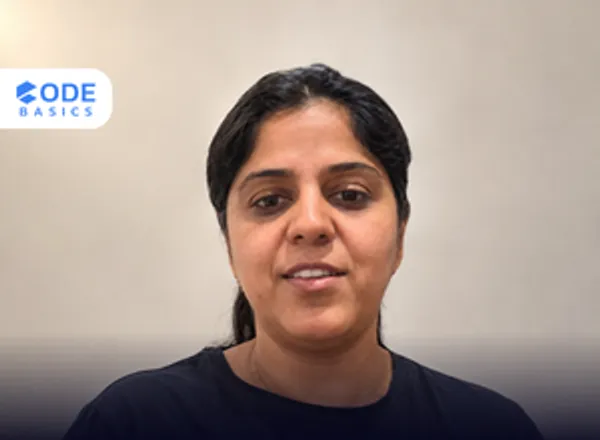
Director of Product Management
 LIVE AI Product Manager: Batch 1

I joined the Codebasics AI Product Management cohort because I wanted something practical, not a regular PM course with AI added on top.
What stood out for me is how AI is built into the whole product journey, from discovery and AI opportunity mapping to metrics, evals, cost, guardrails and GTM. The instructors are industry practitioners and that keeps the learning grounded in how products are actually built.
The breakout sessions were equally valuable. Working through real problems with professionals from diverse domains brought different perspectives and made the learning much more practical.
One idea that really stayed with me is simple. Start with the problem, not the AI. Understand the workflow and pain points first then use AI opportunity mapping to decide where AI genuinely adds value.
The capstone brings everything together. It is not just about building an AI app but about working through the full AI product journey, from problem discovery and product definition to cost, metrics, evals, guardrails, a working prototype and stakeholder presentation.
Overall, it has been a practical and highly structured way to learn how to think like an AI product manager, not just how to build with AI.

One of the best-designed and best-delivered AI Product Management courses I have attended so far. Hats off to the entire team for the thought, planning, and effort that has gone into designing this learning journey.
This is truly "AI Product Management in Practice," not just another theory-based course. I genuinely feel that if I hadn't taken this course, I wouldn't even have known that many of these topics existed. Several of them are rarely discussed in books, yet they become incredibly important when you're working on AI products. This course brought those hidden but essential concepts into the open.
Each mentor brings a unique perspective, and together they make the course incredibly comprehensive. Thanks to all mentors and the team who made this course possible.
I am truly grateful to have had the opportunity to be part of this course. In a way, I had manifested finding a course exactly like this—and I'm so glad it became a reality.

The AI Product Management course by Codebasics has been a fantastic learning experience. A special thanks to Dhaval, Akshay, Karandeep, Aakash, and Mochitha for making the sessions practical, engaging, and easy to understand.
What I really appreciated was the focus on real-world AI product management rather than just theory. The sessions covered everything from identifying AI opportunities and creating PRDs to AI capabilities, evaluation frameworks, guardrails, success metrics, MVP scoping, GTM, AI moats, and roadmaps.
The instructors brought different perspectives and explained concepts through practical examples and industry use cases, which made it much easier to understand how AI products are actually built and taken from an idea to implementation.
Overall, this course has significantly strengthened my understanding of AI Product Management and the end-to-end AI product lifecycle. I would definitely recommend the course to anyone looking to build or transition into a career in AI Product Management.
Thank you to the entire Codebasics team and all the instructors for putting together such a valuable and practical learning experience!
I was part of the pilot batch of the Codebasics AI Product Manager program, and it was one of the best online learning experiences I’ve had. I’ve taken courses from well-known universities, and the teaching here wasn’t merely comparable—it was better.
The program gets the technical depth exactly right. It doesn’t turn product managers into engineers, but it gives them enough understanding to make informed decisions and have credible conversations with technical teams. Having also completed the Codebasics AI Engineering Bootcamp, I could clearly see how thoughtfully the two programs draw that boundary.
What stood out most was how much Dhaval, Akshay, Karan, Hem, and the entire team cared about whether we genuinely understood the material. Every concept was made practical: building agents in different ways, evaluating costs, turning an idea into a defensible business case, and adapting the conversation for an AI engineer, CIO, or business stakeholder. The role-plays were especially valuable.
When a topic moved too quickly, the team listened and arranged an additional session. That responsiveness, combined with their openness, curiosity, and respect for the cohort’s experience, made the classes feel like genuine conversations.
I finished the program with skills I could apply at work immediately. I highly recommend it to aspiring AI product managers, business analysts, project managers, and functional consultants who want practical AI literacy and the confidence to lead AI initiatives.
 Abhishek Timmaraju
Senior Director IT Operations & Enterprise Applications
LIVE AI Product Manager: Batch 1
I enrolled in the AI PM Bootcamp expecting to learn general AI PM frameworks and terminology. What I actually walked away with was something more specific - a real mindset change in how I approach implementing AI in product problems, which is a different layer than regular PM work. The capstone project was the turning point. Instead of a hypothetical case study, I worked on a real business problem, which meant I had to make actual tradeoffs, not just theoretical ones. It also taught me where AI actually belongs in a product and where it doesn't - not every problem needs an AI solution, and knowing which is which matters more than the AI itself.
The rest of it felt different too, mainly because it came from founders who've actually built and shipped AI products themselves. They weren't teaching from a textbook; they were sharing what they'd learned the hard way, mistakes included. That made me take every exercise more seriously - this wasn't theory, it was real lessons from people who'd actually been in the room when things worked and when they didn't. I came out of this bootcamp thinking like an AI product manager, not just knowing what one does.
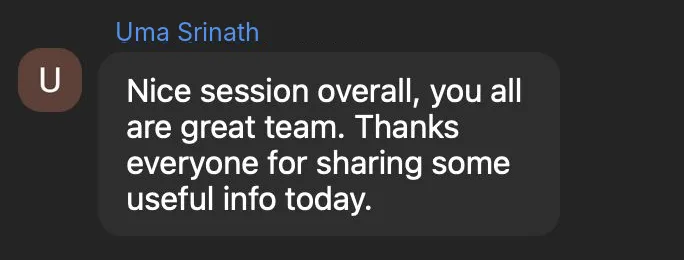
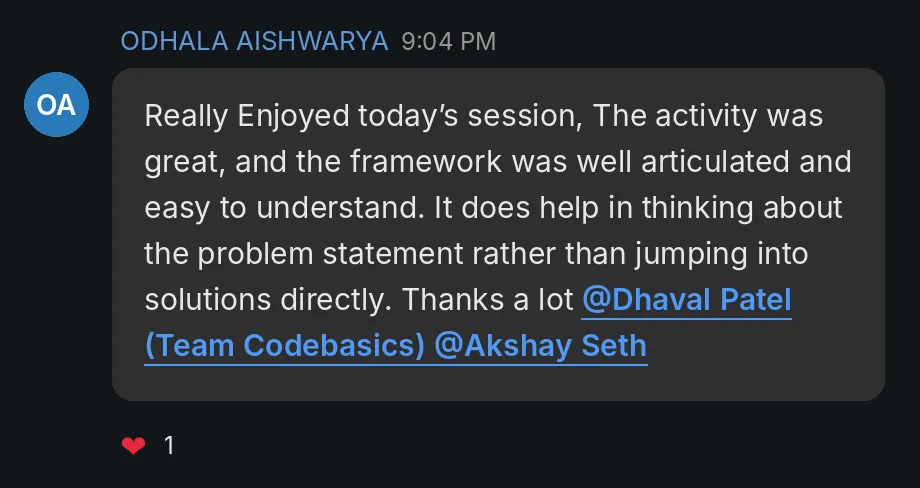
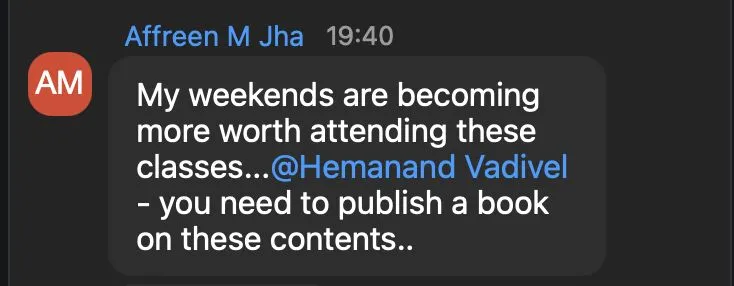
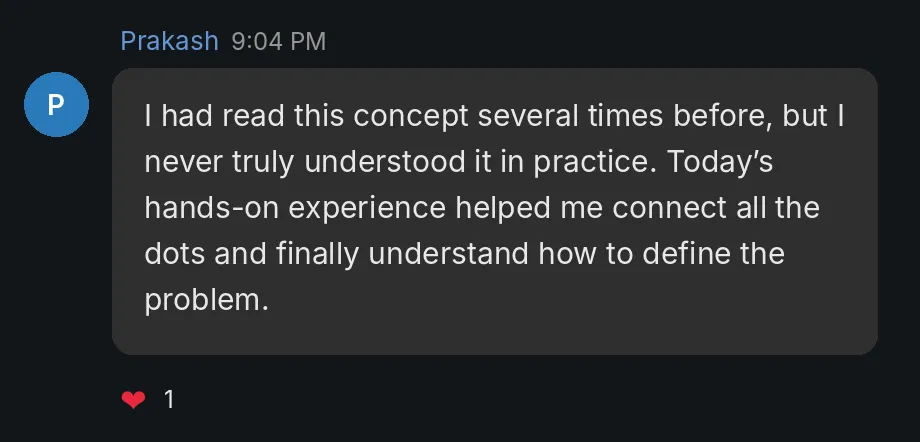
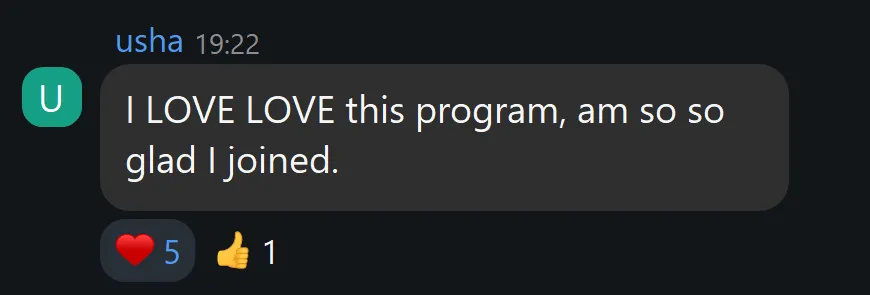
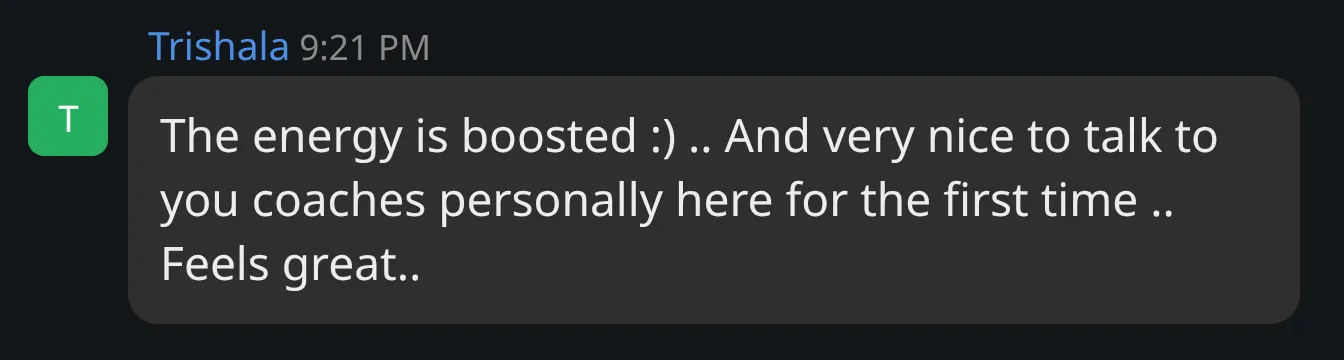
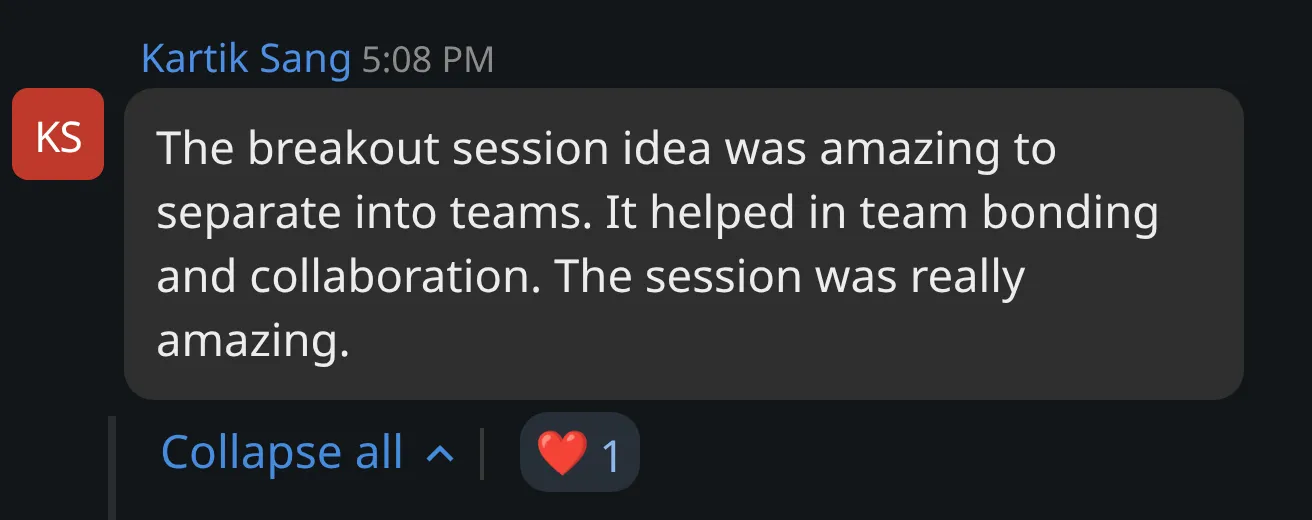
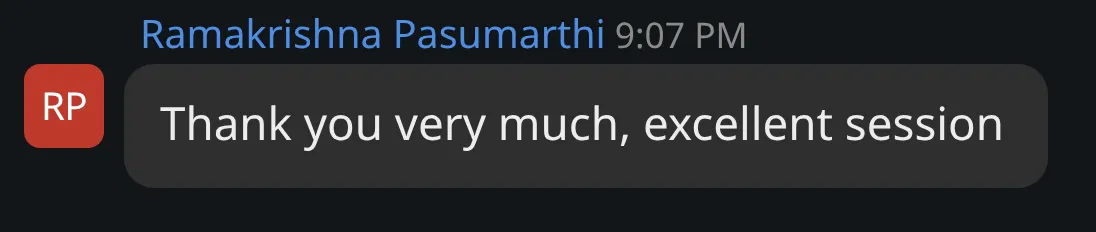
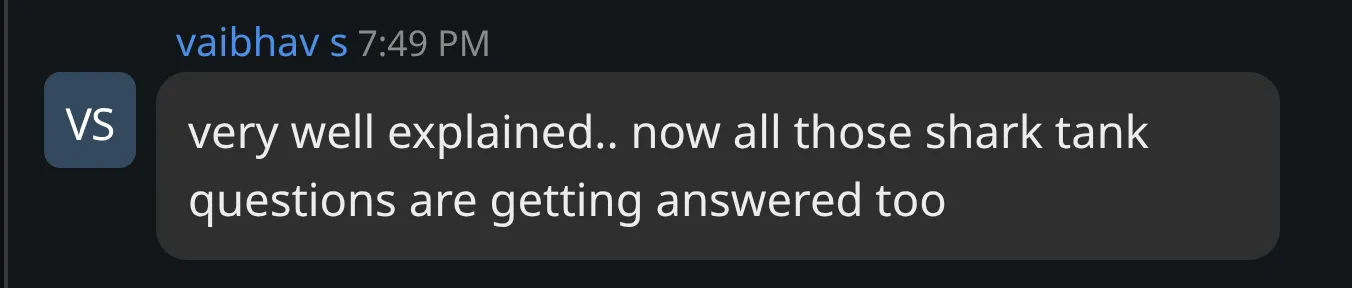
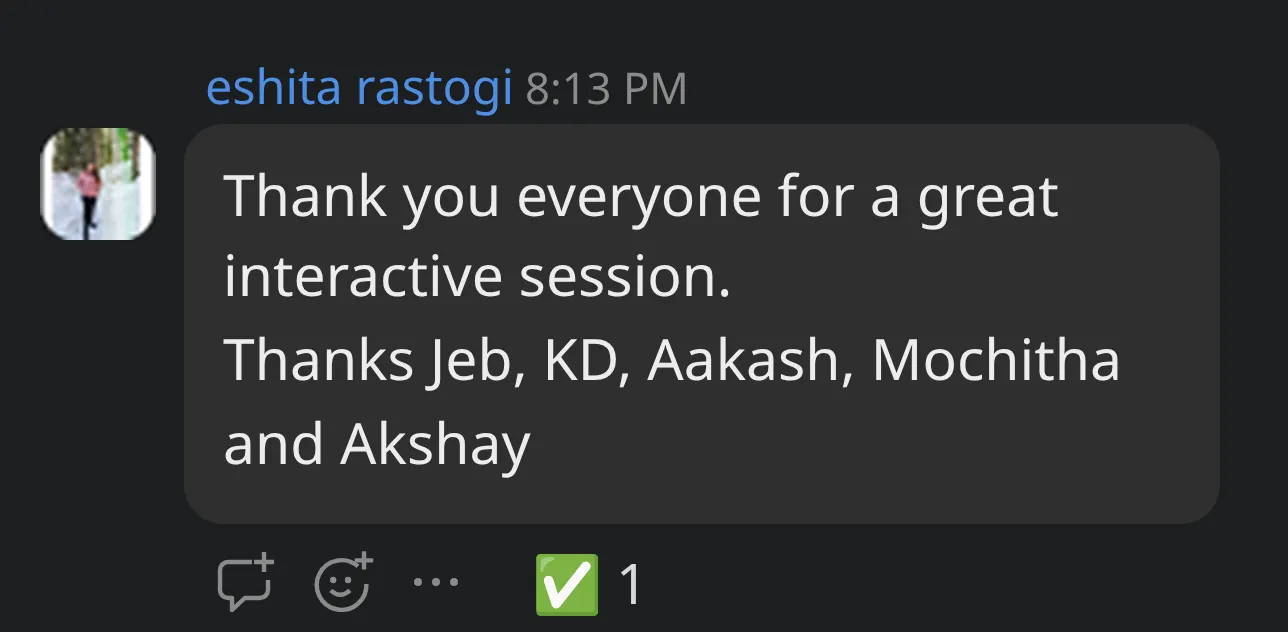
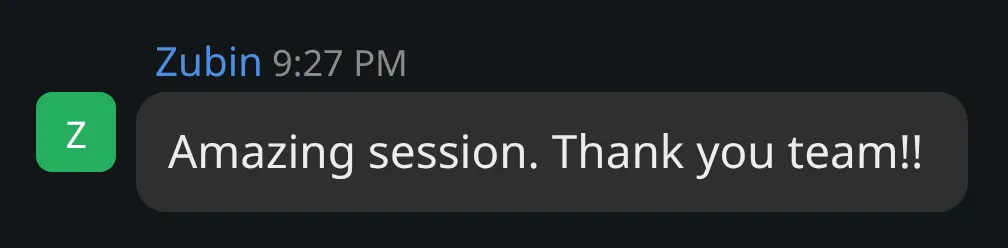
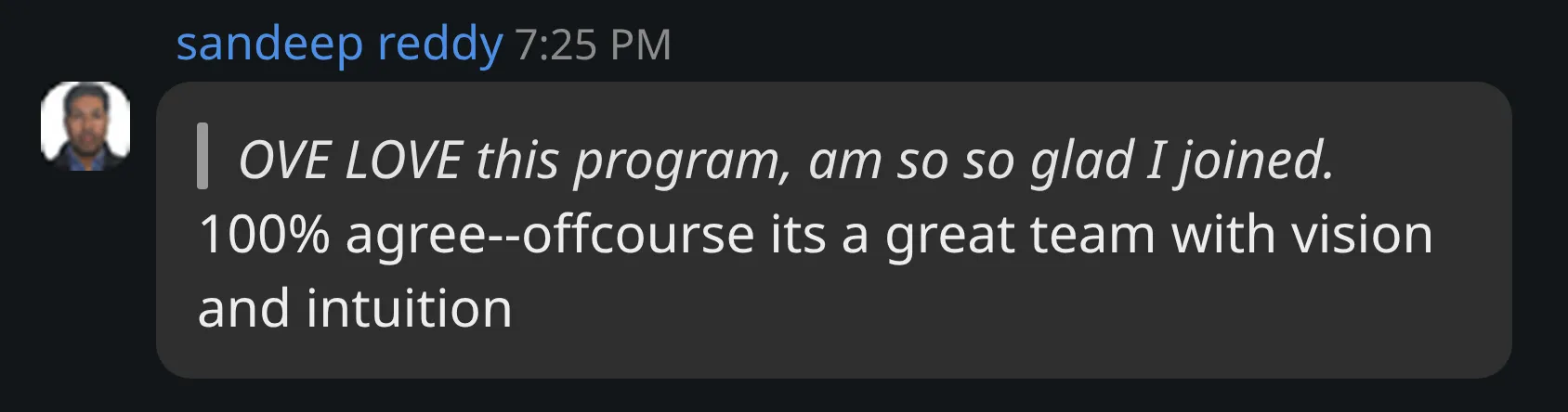
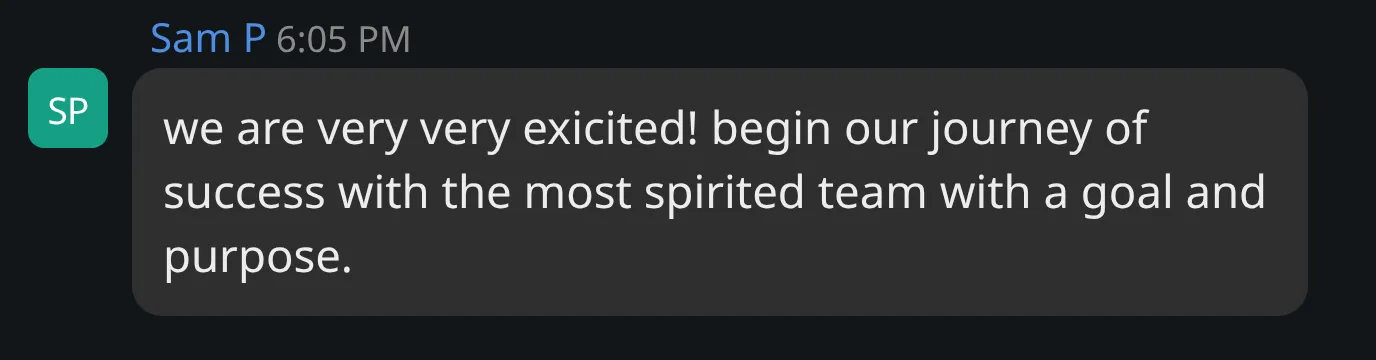
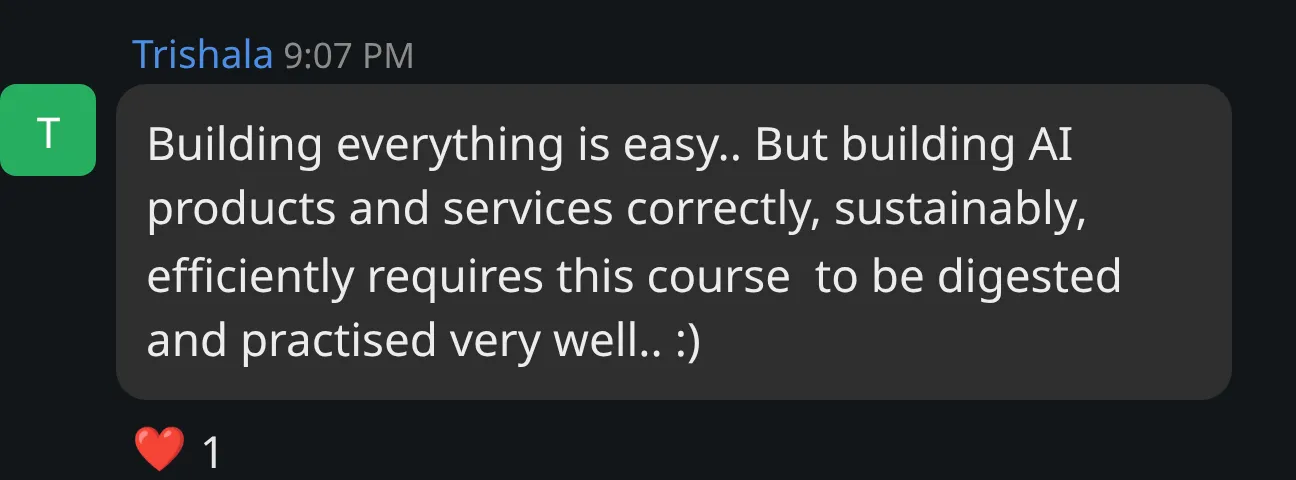
Straight from the live sessions
What AI Product Managers typed in the cohort chat, unedited.
The Codebasics Promise
Build & Ship Production AI in 10 Weeks.
Not theory. A working cohort where you build real AI products.
| What you get | Self-study | Other live bootcamps | Our live cohort |
|---|---|---|---|
| Live, mentor-led sessions | |||
| Real AI work you ship | Rarely | Sometimes | A real client project |
| The current 2026 AI product stack | On your own | Often dated | |
| Job assistance | |||
| Investment | Your time | Usually far higher | US$630 |
May we help you?
Frequently Asked
Questions

Q.1
How is this different from recorded AI PM content available online?
Q.2
When are the live sessions held?
Q.3
What happens after 10 weeks?
Q.4
What if I miss a live session?
Q.5
What is the Soft Skills Bootcamp and how do I access it?
Once you enroll in the Cohort, access is included automatically. Log into your Codebasics dashboard, go to your AI PM Cohort section, and you will find the Soft Skills Bootcamp courses listed there alongside your cohort materials. No separate purchase or enrollment needed.
Q.6
What is the Inner Circle, and how is it different from regular enrollment?
Q.1
Is this designed for fresh graduates?
Q.2
Do I need coding experience?
Q.1
Do you offer job placement?
Q.1
I already purchased the Soft Skills Bootcamp or a course that is part of it. Do I get a price reduction on the AI PM Cohort?
Q.1
What is the refund policy?
Q.1
Can I join after the sessions are started?
Q.1
Do I need to pay for the tools used in class?
If you later choose to build beyond the free-tier limits, you may need paid services or plans. These additional costs are optional and are not required to complete the cohort.

Q.1
How is this different from recorded AI PM content available online?
Q.2
When are the live sessions held?
Q.3
What happens after 10 weeks?
Q.4
What if I miss a live session?
Q.5
What is the Soft Skills Bootcamp and how do I access it?
Once you enroll in the Cohort, access is included automatically. Log into your Codebasics dashboard, go to your AI PM Cohort section, and you will find the Soft Skills Bootcamp courses listed there alongside your cohort materials. No separate purchase or enrollment needed.
Q.6
What is the Inner Circle, and how is it different from regular enrollment?
Q.1
Is this designed for fresh graduates?
Q.2
Do I need coding experience?
Q.1
Do you offer job placement?
Q.1
I already purchased the Soft Skills Bootcamp or a course that is part of it. Do I get a price reduction on the AI PM Cohort?
Q.1
What is the refund policy?
Q.1
Can I join after the sessions are started?
Q.1
Do I need to pay for the tools used in class?
If you later choose to build beyond the free-tier limits, you may need paid services or plans. These additional costs are optional and are not required to complete the cohort.
Festive season? Catch up after Diwali. Inner circle US$630 extended to Tue, 10th Nov. Save US$210.


